The Labor Cost Trap: When Premium Labor Reduction Falls Short
Highlights
A comprehensive view of premium labor costs matters: One health system cut traveler utilization by nearly 80%, yet premium labor costs increased by approximately $1.6 million annually.
Costs shifted rather than disappeared: As traveler use declined, overtime and incentive-based shifts expanded, increasing overall premium labor spending.
Workforce conditions drive premium labor demand: Persistent vacancies, scheduling inefficiencies and inadequate workforce flexibility often create reliance on travelers, overtime and incentive pay.
Sustainable cost reduction requires systemic change: Organizations can reduce premium labor dependence by strengthening recruitment, optimizing staff deployment and building flexible workforce layers.
Table of Contents
- Looking beyond labor categories
- A framework for sustainable premium labor reduction
- Filling vacancies in the core workforce
- Optimizing deployment of existing staff
- Building flexible workforce layers
- Call to action
- Frequently asked questions
Recent research, including a 2026 KPMG study, suggests that travelers may be less expensive than permanent staff in certain situations when all associated labor costs are considered. While those findings have generated debate, they reinforce an important point: reducing a single premium labor category does not necessarily reduce overall labor costs.
In a recent analysis of a large, not-for-profit Midwest health system, traveler utilization declined by nearly 80% over 12 months, dropping from more than 140 FTEs to fewer than 30.
On paper, the initiative appeared successful. By year-end, however, premium labor costs had increased by approximately $1.6 million annually. So, what happened?
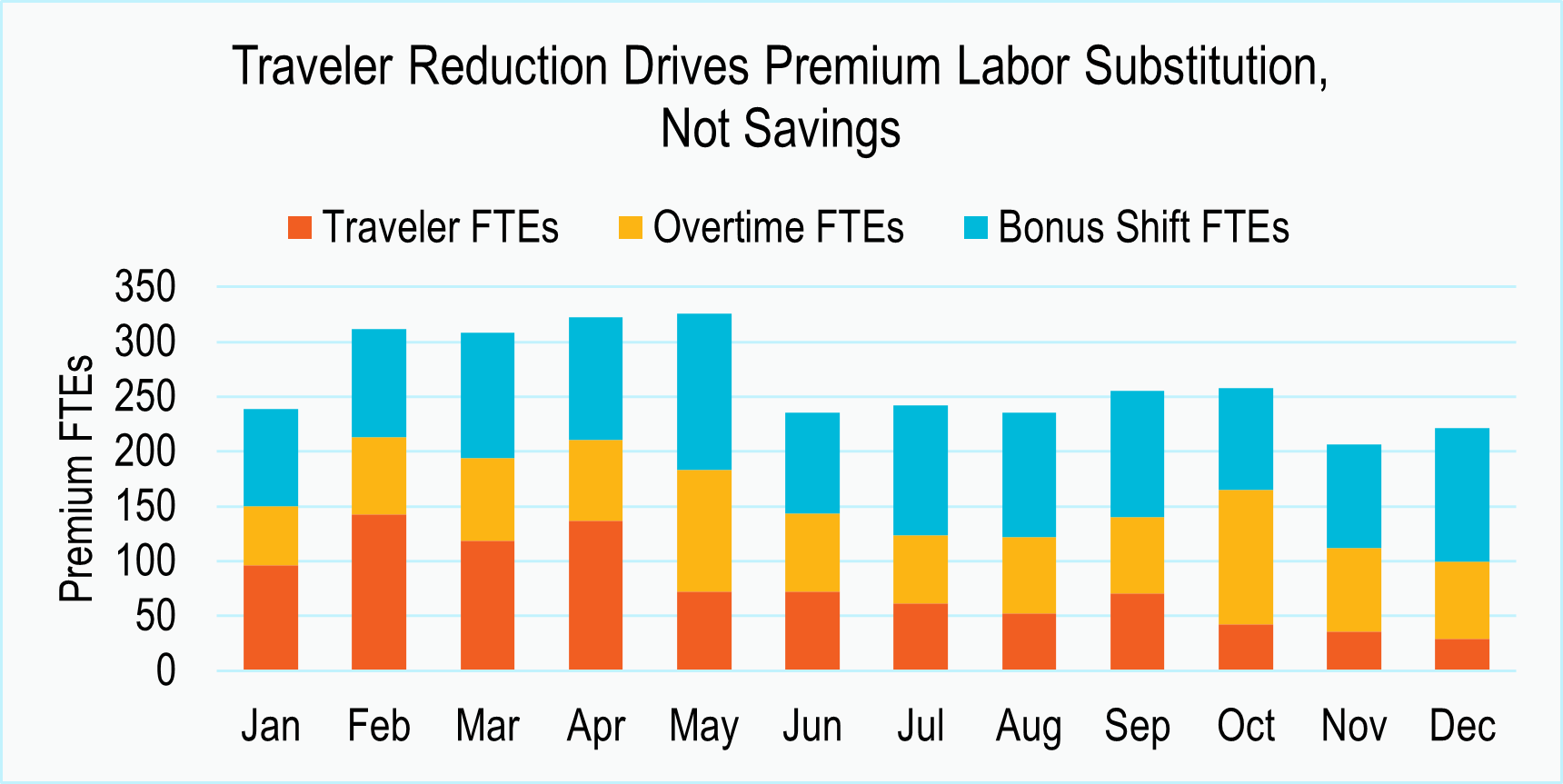
While traveler utilization declined, overtime and incentive-based shifts expanded, changing where labor dollars were spent rather than reducing overall premium labor spend.
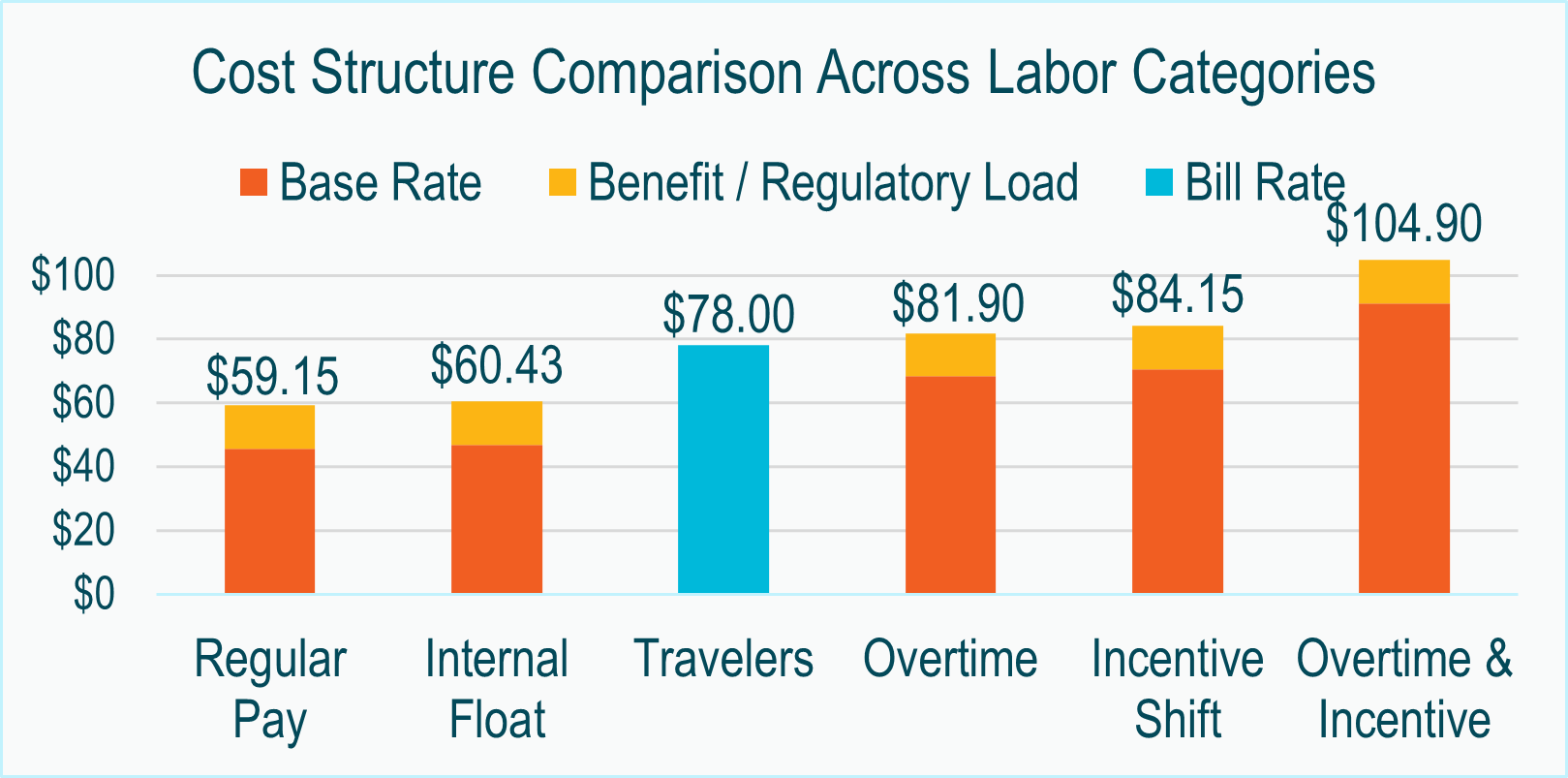
The cost analysis revealed a surprising outcome: as overtime and incentive-based shifts made up a larger share of premium labor utilization, the average premium labor cost increased from $82 to $85 per hour.
Looking beyond labor categories
Workforce strategies are often organized around labor types: travelers, per diem staff, overtime, incentives and float resources. However, reducing reliance on any one labor category does little to address the workforce conditions driving its use.
A framework for sustainable premium labor reduction
Sustainable premium labor reduction requires addressing workforce conditions that create demand for premium labor in the first place.
Rather than relying on reactive staffing measures, they take a more strategic approach to workforce planning, deployment and flexibility. This allows them to reduce reliance on premium labor without shifting costs elsewhere or increasing workforce strain.
Filling vacancies in the core workforce
Persistent vacancies are one of the most common drivers of premium labor utilization. When positions remain unfilled, organizations often rely on travelers, overtime or incentive shifts to maintain coverage.
Reducing premium labor, therefore, starts with improving the ability to attract and retain permanent staff. Organizations should evaluate recruitment effectiveness, employer brand strength, candidate experience and retention strategies to reduce structural reliance on premium labor over time.
Optimizing deployment of existing staff
Even when positions are filled, inefficient scheduling and inconsistent utilization can create unnecessary demand for premium labor. This “FTE erosion” occurs when available staff are not consistently deployed to their full capacity, creating gaps that must be filled through overtime or incentive shifts.
Health systems should evaluate scheduling practices, identify under- and over-utilization patterns, and better align staffing with actual demand.
Building flexible workforce layers
Variation in patient demand is inevitable, but reliance on premium labor is not.
Organizations that develop flexible workforce layers — including appropriately-sized float pools, cross-trained staff and targeted use of travelers — are better equipped to absorb demand variation without overreliance on overtime and incentive-based staffing.
Achieving this requires a clear understanding of demand patterns, skill mix requirements and workforce capabilities across the health system.
Call to action
For a more sustainable and flexible approach to workforce planning and premium labor reduction, explore Advisory Solutions.
Frequently asked questions
Why doesn’t reducing travelers lower labor costs?
Reducing travelers does not always lower labor costs because organizations often replace travelers with overtime, incentive pay or other premium labor sources. Without addressing vacancies, workforce utilization and staffing flexibility, costs can shift rather than decrease.
What causes high premium labor utilization?
Premium labor utilization is often driven by workforce vacancies, inefficient deployment of existing staff and limited workforce flexibility. These conditions can increase reliance on travelers, overtime and incentive-based staffing.
What is the most effective way to reduce premium labor?
The most effective approach is to address the workforce conditions that create premium labor demand. This includes reducing vacancies, improving workforce utilization and building flexible staffing resources such as float pools.
 Reducing Contingent Labor Utilization by 75% in One High-Use Area