From Workforce Complexity to Better Decisions: Why a Healthcare Workforce Management Platform Is the Foundation for Intelligent Operations
Highlights
- Fragmented systems make workforce decisions harder. Disconnected data and workflows limit visibility into costs, coverage and workforce needs.
- A platform-first strategy creates a shared view of the workforce. It connects data and processes across labor types while keeping essential systems in place.
- Connected data comes before workforce intelligence. Standardized workflows, clear governance and human oversight are necessary for intelligence and AI to deliver value.
Table of contents
Fragmentation limits workforce intelligence
From efficiency to better workforce decisions
What healthcare leaders should look for
Conclusion: Build the foundation first
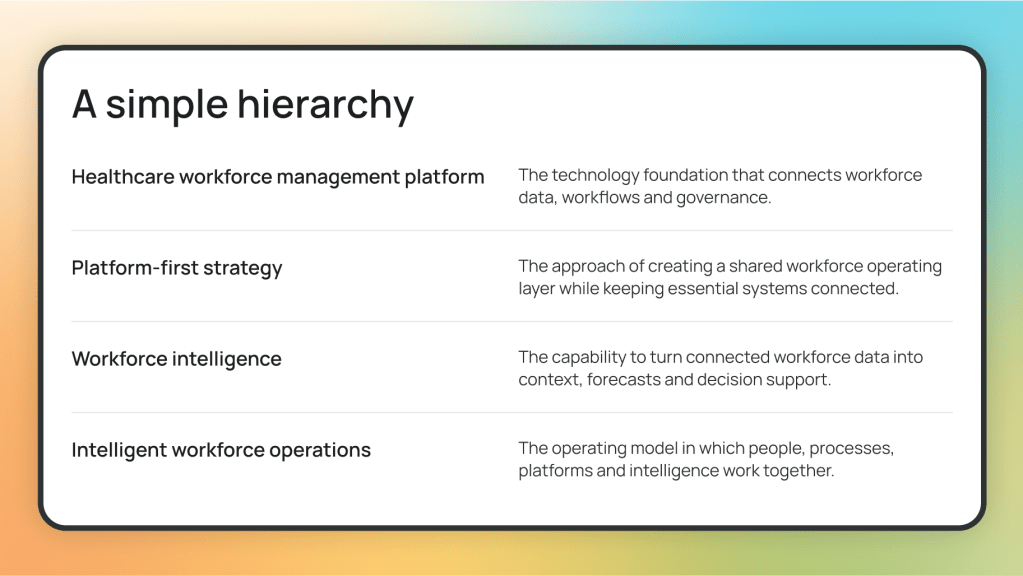
Healthcare organizations cannot derive useful workforce intelligence from fragmented data and disconnected processes. A healthcare workforce management platform creates a shared operating layer for workforce data, workflows and governance across employed, contingent, locums, project-based and outsourced labor. That foundation helps leaders improve visibility, reduce administrative time-wasters and make better workforce decisions.
Fragmentation limits workforce intelligence
Disconnected workforce systems make it difficult to see labor costs, coverage risks and workforce needs clearly. When role requests, credentialing, scheduling, timekeeping, vendor management and invoicing happen in separate systems, teams spend significant time moving information, reconciling records and correcting errors.
VMS and point solutions are not inherently the problem. The problem is disconnected data, workflows and ownership. That fragmentation can delay hiring, limit visibility and create hidden technology costs.
A platform-first response
A platform-first strategy connects the systems and processes leaders need to see together without requiring them to replace every essential application. It creates a shared workforce layer across HR, payroll, finance, scheduling, clinical and staffing systems.
The value is measurable. One health system reduced contingent labor headcount by more than 90%, saved approximately $2 million over five months and reclaimed up to 800 administrative hours annually.
Connected data comes first
Workforce intelligence depends on connected, trustworthy information. Analytics and AI can identify patterns, forecast needs and surface risks, but they cannot fix fragmented data, inconsistent definitions or disconnected ownership.
Responsible AI should help leaders organize information and evaluate alternatives while keeping accountable people in control of decisions affecting patient care, employee experience, financial performance and organizational resilience.
From efficiency to better workforce decisions
The path to intelligent workforce operations is cumulative: standardized processes create efficiency, connected data creates visibility and visibility makes forecasting and decision support possible. The goal is not automation for its own sake. It is better decision-making with transparency, human oversight and local control.
A modern healthcare workforce management platform can support planning, analytics, scheduling, credentialing, compliance and vendor oversight while connecting workforce operations with essential HR, finance, payroll and clinical systems.
The results can extend across the organization:
- HR gains a shared view of hiring, onboarding, credentialing and workforce gaps.
- Procurement gains stronger visibility into supplier performance, rates, contract and spend.
- Nursing leaders gain clearer insight into staffing availability, credentials and coverage.
- Executives gain a more complete view of labor costs, workforce supply and operational priorities.
Client outcomes demonstrate the potential. By connecting staffing, productivity and cost data, Premier Health increased total FTEs by 4%, reducing contingent labor spend by 15% year over year and lowering average bill rates by 11.6%.
What healthcare leaders should look for
Healthcare organizations should evaluate workforce technology partners based on practical capabilities, not feature volume. The right partner should support shared data definitions, standardized workflows, governed access, measurable outcomes and incremental adoption. It should connect with essential systems, support human oversight and demonstrate how the technology addresses real operational or financial needs.
A platform-first approach does not require centralized decision-making for every staffing issue. Specialty and local leaders can retain clinical control while the organization gains consistent processes, shared visibility and stronger governance around the work that supports those decisions.
Conclusion: Build the foundation first
Healthcare organizations will not solve workforce challenges by adding disconnected tools or pursuing automation for its own sake. They need an operating model that connects workforce data, workflows and governance while preserving local and clinical accountability.
Organizations can begin by standardizing data and workflows, connecting essential systems and establishing clear ownership. Over time, overlapping point solutions can be consolidated or integrated while payroll, HRIS and finance systems remain in place. The goal is trusted information that helps leaders make better decisions about labor costs, coverage, workforce supply and long-term planning.
Frequently asked questions
What is workforce management in healthcare?
Workforce management in healthcare includes the processes and technologies used to recruit, schedule, deploy and support clinical and nonclinical staff. It helps organizations align workforce resources with patient demand, operational priorities and financial goals.
What is a healthcare workforce management platform, and how is it different from a VMS?
A healthcare workforce management platform connects data and workflows across sourcing, scheduling, credentialing, compliance, analytics, planning and workforce intelligence. A traditional VMS primarily manages external suppliers and contingent labor transactions.
What is workforce intelligence?
Workforce intelligence uses connected data, analytics, context and decision support to help leaders understand performance, identify trends, anticipate needs and make informed decisions about coverage, cost and planning.
How does AI improve workforce management?
AI can organize information, identify patterns, surface risks, forecast trends and evaluate potential courses of action. Its value depends on consistent data, connected workflows, clear governance and human accountability.
Want the complete framework, capabilities and examples? Download the full whitepaper to explore how a healthcare workforce management platform can support intelligent workforce operations.
 Locumpedia: Beyond the Contract: Strengthening Communication in Locum Tenens Staffing