Centralizing Locums Management: A New Operating Model for Healthcare
At a glance
The bill rate is only part of the cost of locums. Delays, duplicate work and missed coverage add up fast.
Best practices include:
- Connect requests, credentialing, vendors and billing in one process.
- Give leaders visibility into coverage, costs and vendor performance.
- Reduce delays and paperwork while keeping clinical decisions with local leaders.
Table of contents
How a decentralized approach creates hidden costs
What a modern locums operating model includes
Key elements of a modern locums staffing model
Shared technology makes the model work
The provider experience affects coverage
Managing locums is no longer just a matter of finding someone to fill a schedule. Many healthcare organizations work with several agencies, each using different systems and processes. That can lead to delays, extra administrative work, billing mistakes and missed coverage. The rates may look acceptable, but it only tells part of the story.
How a decentralized approach creates hidden costs
Locums programs are often managed separately by each department. Cardiology, anesthesia and emergency medicine may each use different agencies, approval steps and record-keeping systems.
That arrangement might work within a department, but it limits the organization’s ability to compare performance, identify patterns and understand enterprise-wide cost. Leaders may not know:
- How much the organization spends on locums overall
- Which agencies consistently provide qualified providers
- Where delays occur before a provider can start
- How much time employees spend repeating administrative work
These visibility gaps create costs that are easy to miss because they are spread across recruiting, clinical, finance and procurement teams.
The locums coordination tax
The full cost of a locums program extends beyond rates. The coordination tax shows up in administrative work, delays and coverage issues surrounding each assignment.
- Internal recruiting and administrative effort
- Credentialing and onboarding delays
- Provider cancellations and delayed patient access
- Disconnected systems and manual processes
- Invoice discrepancies and off-contract spend
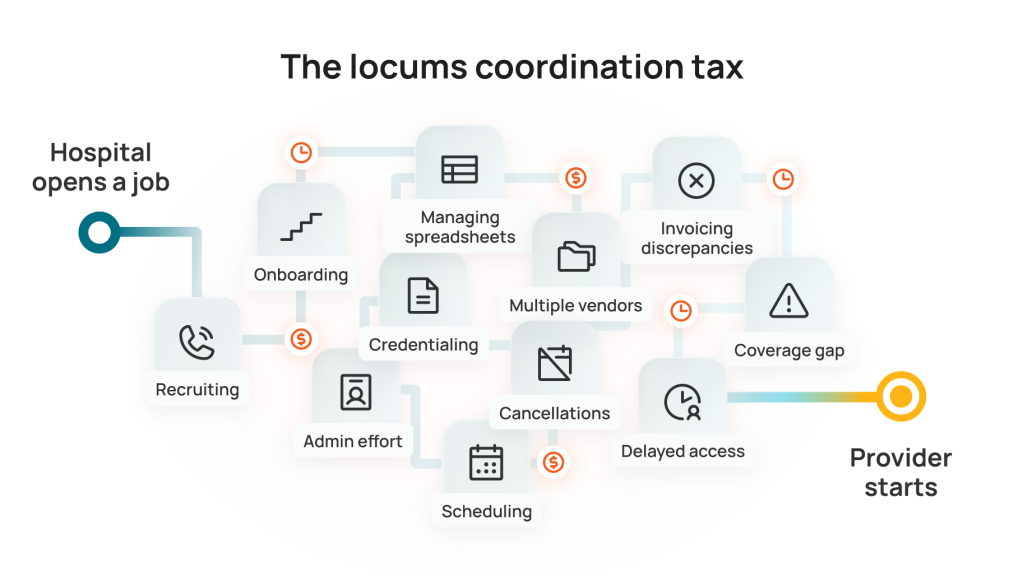
Delays in credentialing can have a direct operational impact. Nearly half of healthcare organizations report measurable revenue impact from slow, manual onboarding and workflow inefficiencies1. Credentialing timelines can extend 90 to 120 days, with each day representing lost provider productivity and potential revenue2. In some cases, delays have been shown to cost hospitals thousands of dollars per day, per physician or advanced practitioner, while also creating coverage gaps that impact patient access.
Why the status quo persists
Decentralization is not just an operational issue. It’s also a cultural one. Specialty leaders need room to make decisions based on clinical expertise and patient needs. A department may benefit from its own approach, but that autonomy can carry greater enterprise cost when data, vendor relationships and workflows remain disconnected. Over time, decentralization can also discourage technology adoption, making the model harder to modernize.
The answer is not to centralize clinical judgement. It is to centralize the supporting foundation, including provider requests, credentialing, agency relationships, reporting and billing. Specialty leaders retain clinical decision-making while executives gain enterprise-wide visibility into program performance.
What a modern locums operating model includes
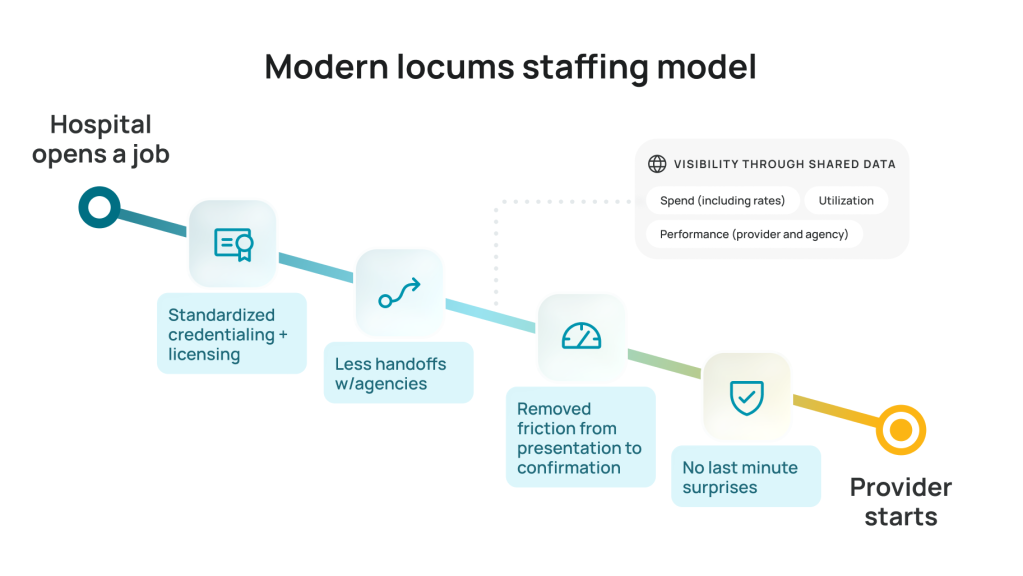
Key elements of a modern locums staffing model
- Clear accountability for program performance
- Consistent processes across facilities and departments
- A unified platform for managing requests, providers and workflows
- Standardized credentialing with shared visibility
- Enterprise visibility with local clinical control
- Shared data across staffing, credentialing and finance teams
Shared technology makes the model work
Technology connects information scattered across emails, spreadsheets and separate systems. A shared platform brings provider, vendor and financial data together, reducing busywork, improving visibility and helping teams evaluate vendor performance against shared measures such as speed, quality, compliance, reliability and cost.
That foundation also matters for AI readiness. AI can accelerate work when data, workflows and governance are connected. It cannot fix fragmented systems or inconsistent processes on its own. Centralization gives AI a stronger foundation.
A health system filled 24 positions in 90 days while reducing costs by 15%. A coordinated approach to sourcing, credentialing, planning and invoicing reduced the administrative burden, improved visibility and supported more consistent coverage.
The provider experience affects coverage
Providers experience the operating model through everyday processes. Unclear communication, delayed credentialing, incomplete work confirmations and repeated requests for information can delay assignments, destabilize coverage or cause providers to leave.
Those breakdowns can contribute to:
- Unfilled shifts
- Rescheduled procedures
- Longer patient wait times
- Higher administrative burden
- Less reliable coverage
A coordinated process reduces handoffs and gives physicians and advanced practitioners a clearer path from assignment acceptance to patient care.
A practical path forward
The path forward is not centralizing every locums decision. It is centralizing the foundation: shared workflows, data, oversight and reporting. That structure gives specialty leaders room to make clinical decisions while giving executives enterprise-wide visibility into cost, performance and coverage.
FAQ’s
What is a locums operating model?
A locums operating model is the combination of people, processes, technology and oversight that determines how locums staffing gets done across an organization. It shapes everything from how requests are submitted and providers are credentialed to how vendors are managed, performance is measured and costs are controlled. The goal is not to centralize every staffing decision. It’s to create a consistent foundation that gives healthcare organizations greater visibility, accountability and efficiency while preserving local clinical expertise.
How can a healthcare organization reduce locums costs beyond negotiating bill rates?
Healthcare organizations can examine the full cost of locums including administrative labor, credentialing delays, cancellations, travel, invoice errors, duplicate systems and lost clinical capacity. Standardized workflows, stronger vendor oversight and shared visibility can help identify and reduce these costs.
What are the hidden costs of a decentralized locums program?
Hidden costs can include duplicative administrative work, inconsistent credentialing, delayed provider starts, invoice errors, fragmented data, cancellations and lost clinical capacity. These costs may be spread across staffing, clinical, finance and procurement teams, making them difficult to identify in a single report.
Does centralizing locums remove local clinical control?
No. A modern centralized model preserves physician and provider selection, specialty expertise and local operational judgment. It centralizes the supporting foundation, including standards, data, workflow visibility, vendor governance and performance management.
What metrics should a locums program track?
Useful metrics include time to fill, credentialing cycle time, provider start delays, assignment completion, cancellations, vendor performance, utilization, total spend, travel costs, and invoice exceptions.
Sources
1 Nearly 46% of healthcare organizations report measurable revenue impact from slow, manual onboarding and credentialing workflows. [medallion.co]
2 Physician credentialing timelines often extend 90–120 days, with each day of delay representing lost revenue and reduced patient access. [directshifts.com], [credentialmate.com]
 How Interim Leadership Turned a Vacancy into a Long-Term Solution